Jingu Stadium Guide 2026: Seats, Rules and the Umbrella Dance
Tokyo’s Meiji Jingu Stadium turns 100 in the fall of 2026, and it still does what almost no modern ballpark does — puts you close to the field, under the open sky, in the middle of a major city. If you’re catching a Tokyo Yakult Swallows game on a trip to Japan, here’s how to pick a seat, what security will and won’t let you carry in, and why 30,000 people pull out tiny umbrellas in the seventh inning.
Table of Contents
Key Takeaways
- Jingu Stadium opened in 1926. In MLB terms, only Fenway Park and Wrigley Field are older.
- Capacity is 30,969 — small by MLB standards, which is exactly why the sightlines are so good.
- Four different subway and train stations serve the park. Which one you want depends on whether you’re sitting on the first-base or third-base side.
- No cans, no bottles, no coolers. Sealed plastic bottles, thermoses and outside food are fine.
- The first-base side and right field bake in the late-afternoon sun. The third-base side sits in shade early.
Jingu Stadium at a Glance
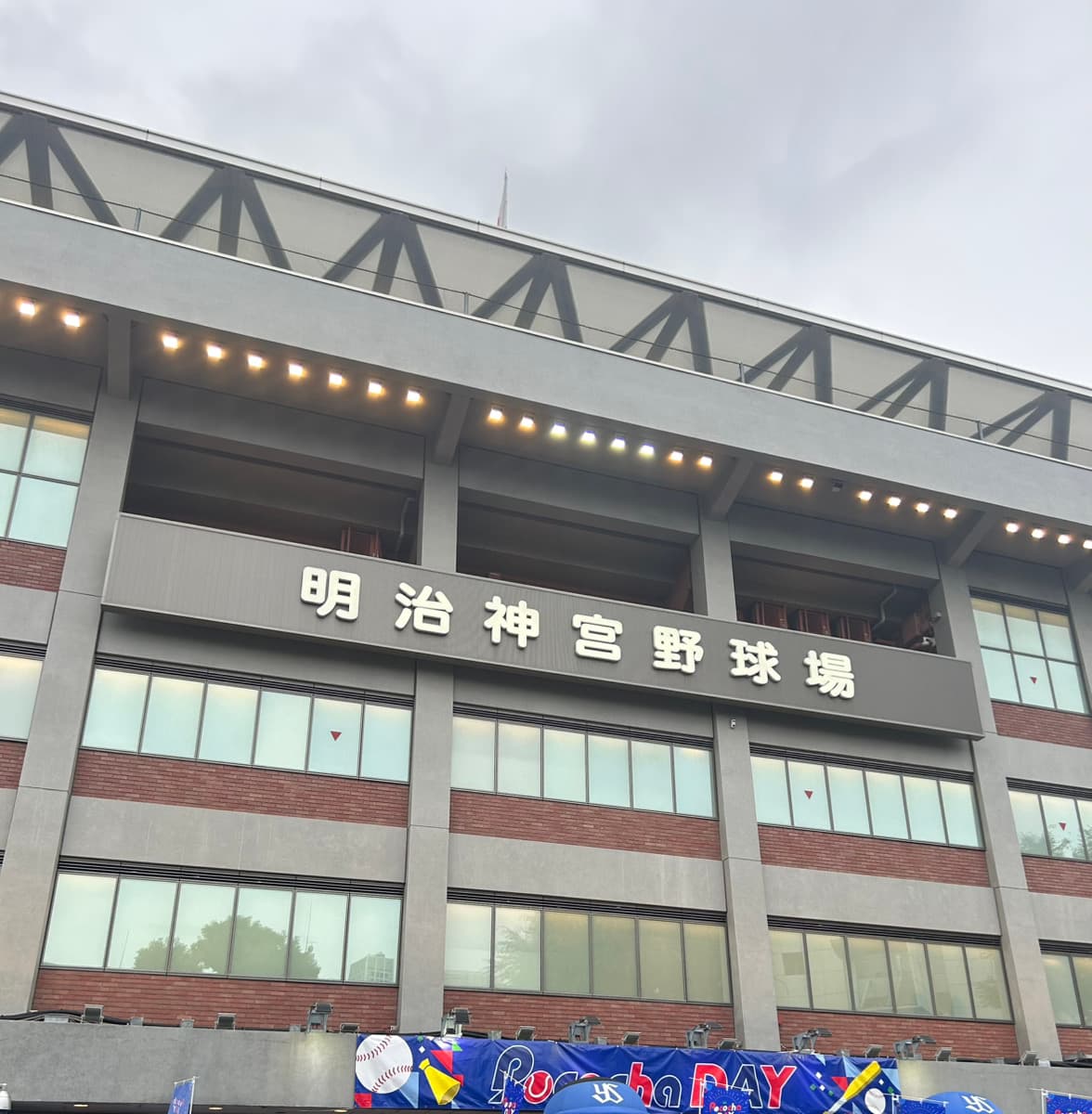
| Item | Details |
|---|---|
| Official name | Meiji Jingu Stadium (commonly “Jingu Stadium”) |
| Address | 3-1 Kasumigaoka-machi, Shinjuku-ku, Tokyo |
| Capacity | 30,969 for NPB regular-season games |
| Opened | Oct. 23, 1926 — the stadium marks its 100th anniversary in fall 2026 |
| Primary tenants | Tokyo Yakult Swallows (home club), Tokyo Big6 Baseball League, Tohto University Baseball League |
The Swallows play in NPB’s Central League, one of Japan’s two major leagues, and Jingu has been their home for decades. The stadium also hosts Japan’s most famous college baseball, which is why you may see it called the sport’s spiritual home here.
How to Get to Jingu Stadium: Pick the Right Station
Four stations serve the ballpark. Choosing by seat location saves you a walk — and choosing by exit saves you a crowd.
- Gaienmae Station (Tokyo Metro Ginza Line, five-minute walk) The closest and most popular option. Best if you’re on the first-base side (the Swallows’ side) or in the right-field stands. Convenience stores and restaurants line the route, so it’s the easiest station for grabbing food on the way.
- Shinanomachi Station (JR Chuo-Sobu Line local, 12-minute walk) Easy from Shinjuku and Akihabara, and closer to the third-base side and left field. The sidewalk from the station is wide and the walk through the Gaien greenery is a pleasant one.
- Kokuritsu-Kyogijo Station (Toei Oedo Line, 12-minute walk) Near the third-base side, and convenient from Roppongi and Daimon. It’s also a smart escape route: Gaienmae gets jammed after the final out, so plenty of fans walk here instead.
- Aoyama-itchome Station (Tokyo Metro Ginza and Hanzomon lines, Toei Oedo Line, 10-minute walk) Three lines in one station, and the best access from Omotesando and Shibuya. Another good way to dodge the post-game crush at Gaienmae.
Where to Sit at Jingu Stadium
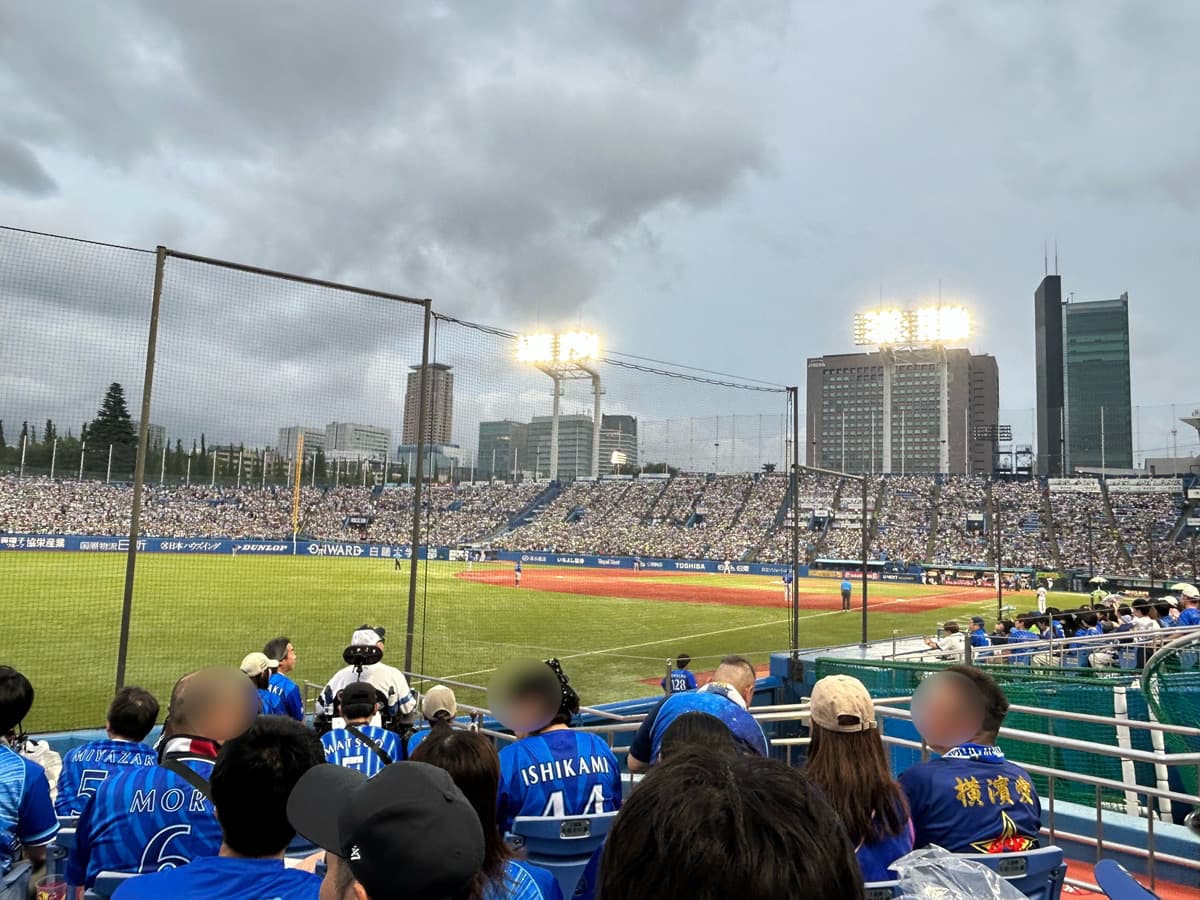
Your seat here isn’t just about sightlines. It determines whether you spend three hours standing and singing or sitting and watching, and whether you spend them in the sun or the shade.
Behind the Plate
The backstop seats put you square with the game’s central duel. The lower level (SS reserved and similar) sits at roughly the catcher’s eye level, close enough to read pitch shape and velocity the way the hitter does.
The upper level — Panorama Roof reserved — is the only covered seating in the entire ballpark. That makes it the one place at Jingu where rain or a low sun won’t reach you, and the view of the whole field is clean.
Best for: fans who want to study pitch sequencing and game flow rather than join the noise. The upper deck is also the easiest recommendation for first-timers and families, since the roof takes weather out of the equation.
Infield Seats
First base is the Swallows’ side. Third base is the visitors’ side. Both give you the whole field at a comfortable distance.
The fence here is lower than at most ballparks and the dugouts are close, so you get an unusually direct sense of how hard professionals actually throw and move. Most seats have backs and cup holders, and before first pitch you can wander down toward the backstop to watch batting practice.
Best for: fans who want to be close to the players but aren’t up for three hours of standing and chanting in the outfield. Bring a beer and a bento, sit down, and let the noise wash over you.
Outfield Seats and the Umbrella Dance
Right field is generally the Swallows’ cheering section; left field belongs to the visitors, though the split shifts for some games. When their team bats, these sections stand and sing for the entire half-inning.
The signature moment is Tokyo Ondo — during the lucky seventh, Swallows fans raise miniature plastic umbrellas and dance in unison to a Japanese folk tune. They do it after every run, too. The whole park turns green, and it’s the single most-photographed thing at Jingu.
Worth knowing: standing is the norm in most of these sections. If you’d rather sit, choose the designated “Swatte Ouen” seats — a section where seated cheering is the rule — or just buy infield tickets. Most outfield seats have no backs and are tightly spaced, so travel light.
One rule is absolute: in the Swallows-only cheering sections of the home outfield (usually right field, sometimes part of left), do not wear visiting-team gear or cheer for the visitors. This is enforced, and it is not the place to test it.
Sun vs. Shade: Which Side Gets Cooked
Home plate sits on the southwest side of the park with center field to the northeast, so as the afternoon wears on, the sun swings around toward the first-base side.
The practical result is a hard line between sun and shade for day games and the early innings of night games.
The first-base (Swallows) infield and the right-field stands take direct western sun until evening — full exposure, no relief.
The third-base (visitors) side slides into the shadow of the backstop grandstand early and stays comfortable.
So the real tradeoff is the home crowd’s energy versus a cooler seat across the diamond. In July and August, that’s not a small decision.
Seating Cheat Sheet
| Area | What it’s like | Sun (day game to evening) | Who it suits |
|---|---|---|---|
| Behind the plate (lower) | Directly behind the catcher. Velocity and pitch sequencing up close. | Falls into the backstop’s shadow relatively early. | Fans who want to watch the craft and the strategy. |
| Behind the plate (upper) | Full-field view. The only roofed area in the park. | Covered — protected from sun and sudden rain. | Comfort-first fans, first-timers, families with small kids. |
| Infield (first base) | Above the Swallows dugout. Close to players, seat backs included. | Direct western sun. Hat and sunscreen required. | Swallows fans who’d rather sit than stand all night. |
| Infield (third base) | Above the visitors dugout. Same clean view of the field. | Shaded early. Noticeably cooler in summer. | Visiting fans, or anyone avoiding the heat. |
| Outfield (right) | Heart of the Swallows support. No seat backs, tight spacing. | Direct western sun. Bring sunglasses. | Fans who want to stand, sing and dance with the umbrellas. |
| Outfield (left) | Visiting support section. Partly Swallows seating for some matchups. | Catches the grandstand’s shadow — shadier than right field. | Visiting fans who want to be near the cheer squad. |
What You Can and Can’t Bring Into Jingu Stadium
Jingu has its own rules, and a few of them surprise visitors. Read this part before you pack a bag.
Tight Seats and Bag Management
Jingu is a historic ballpark, and it shows in the seat pitch — rows are closer together than at a modern park, side to side and front to back. In the general infield and outfield areas especially, an adult’s legroom disappears fast. Leave the big backpack at the hotel.
The local trick is to carry a large plastic trash bag — roughly 45 liters, about 12 gallons. Put your whole bag inside it and slide it under your seat, and you’ve protected it from shoes tracking past your row and from any beer that gets spilled upslope from you. It costs nothing and it works.
Anything larger — a suitcase, a roller bag — needs to go in a coin locker at the station. Bring the minimum to your seat.
Rain, Sun and Temperature
Apart from part of the upper backstop level, there is no roof. Plan for the weather.
- Rain: umbrellas may not be opened in the stands — they block everyone’s view. If rain is in the forecast, bring a poncho or a rain jacket. There is no substitute.
- Sun: the first-base side and right field take direct western sun. A hat, sunglasses and sunscreen matter for day games and for the early innings of night games alike.
- Temperature: night games in early spring and fall get much colder than the daytime high suggests once the sun drops. Pack a packable windbreaker or a lap blanket even if the afternoon was warm.
Security Check and Prohibited Items
Every gate runs a bag check. No exceptions.
Not allowed: anything dangerous, plus glass bottles, cans, coolers, and any bag too large to fit at your seat.
The pour-into-a-paper-cup service that Japanese ballparks once offered is gone at Jingu. If you show up with canned beer, you will not be allowed to carry it in — you’ll be finishing it at the gate or throwing it away.
Allowed: sealed plastic bottles, thermoses, and outside food, including a packed lunch or a convenience-store bento.
Have your bag open and ready as you reach the gate. The line moves faster and nobody behind you has to wait.
Umbrella Etiquette
At Jingu, umbrellas play two completely different roles, and the rules are opposite for each.
Rain umbrellas may not be opened in the stands, period — they block sightlines and they’re a hazard in a packed row. Wear a poncho instead.
The miniature umbrellas fans wave when the Swallows score are cheering gear, and they’re a Jingu institution. Just keep yours inside your own seat space and don’t raise it so high that you catch the person behind you. And don’t wave one in the visiting section — that’s off-limits.
Food, Fireworks and College Baseball
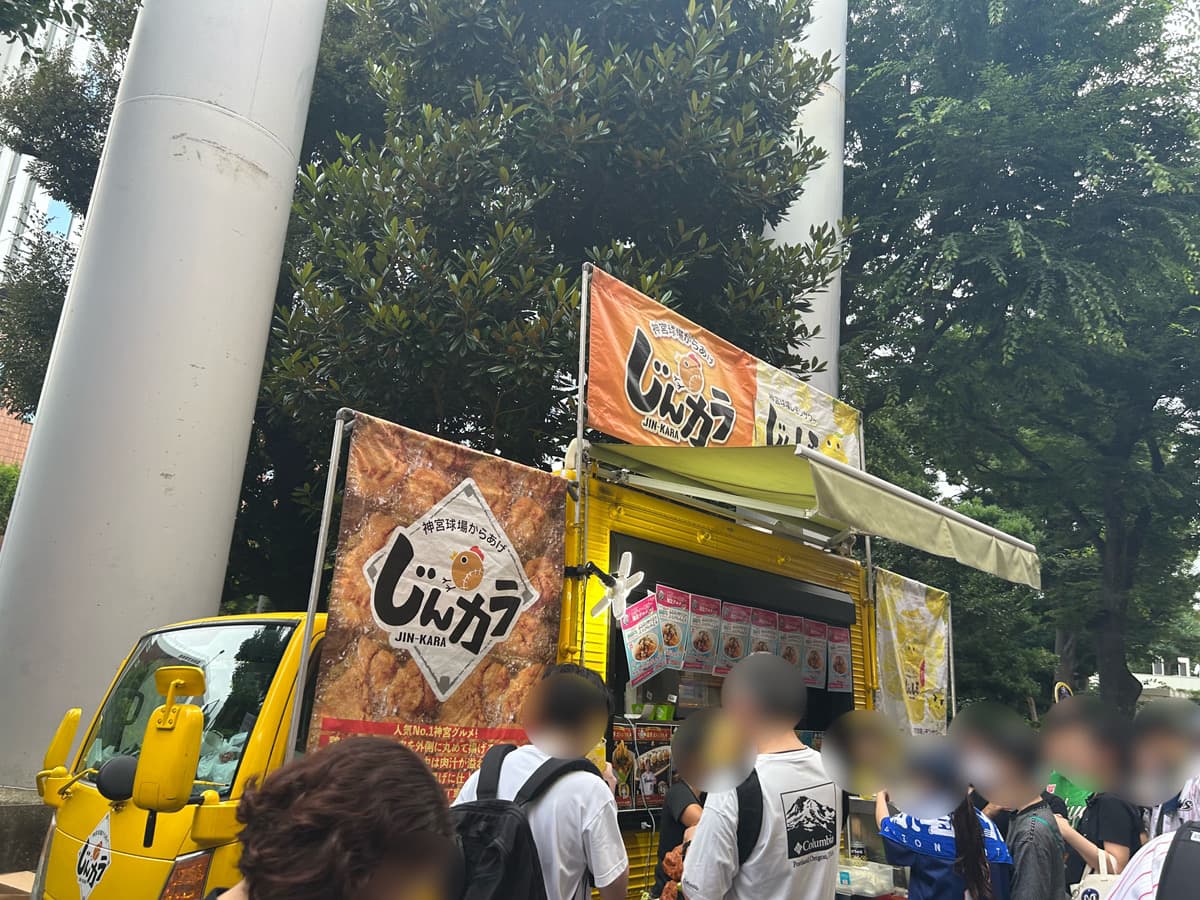
Jingu gives you plenty to do between pitches.
Ballpark Food
The two staples are jin-kara, hot and juicy Japanese fried chicken, and jin-remo, a crisp lemon sour — order them together and you’ve had the full Jingu experience.
Tsuba-kuro-yaki, a filled cake shaped like the team’s mascot, is the perennial snack favorite. Beyond that, look for limited-run desserts served in souvenir batting-helmet bowls and hearty player-collaboration dishes that rotate through the season.
Eating all of that in the open air with a night breeze coming through is most of the appeal.
Summer Fireworks
From July through August, night games at Jingu end the bottom of the fifth with a fireworks show launched from behind the batter’s eye. The stadium goes full festival for a few minutes.
Add the sea of miniature umbrellas in the lucky seventh and the between-innings antics of Tsubakuro, the Swallows’ mascot — including his signature aerial flip — and the entertainment holds up even when the game doesn’t.
College Baseball’s Holy Ground and the Gaien Neighborhood
Jingu also hosts the Tokyo Big6 and Tohto university leagues, which makes it the most storied college baseball venue in Japan. The student cheer squads and brass bands fill the stands with a sharper, more earnest kind of noise than a pro game produces. If your trip lines up with a college weekend, go.
The surrounding Meiji Jingu Gaien is a genuine green pocket of central Tokyo. The ginkgo-lined avenue is worth a walk before or after the game, and the neighborhood cafes are good ones — the ballpark visit doubles as an afternoon in one of the city’s most attractive districts.
When Will the New Jingu Stadium Open?
The replacement ballpark is scheduled to host games around 2033. The full redevelopment of the district — plazas, office towers and all — is slated to finish in 2038.
A Chain of Moves, One Building at a Time
Neither baseball nor rugby stops during construction, so the district gets rebuilt in sequence: tear one venue down, build its replacement on the neighboring lot, then repeat.
- Jingu Second Stadium demolished (complete), 2023– The first step. The second stadium, which also served as a driving range, is gone.
- New Chichibunomiya Rugby Stadium built, 2026–2030 Rises on the old second-stadium site. The current rugby ground stays in use until it’s finished.
- Current Chichibunomiya Rugby Stadium demolished, 2030– Comes down once the new rugby venue opens.
- New Jingu Stadium built, 2031–around 2033 Goes up on the old rugby ground. Plans call for an open-air ballpark with an attached hotel.
- Current Jingu Stadium demolished, lawn plaza built, 2033 onward After the move, the existing ballpark comes down and the site becomes a large lawn plaza connected to the ginkgo avenue.
- Full completion, 2038 Includes the surrounding commercial and office development.
Why the Timeline Slipped
The original plan targeted a 2032 opening for the new ballpark.
Public pressure to protect the Gaien’s mature trees and green space grew loud enough that the Tokyo Metropolitan Government asked the developers — Mitsui Fudosan, Meiji Jingu and partners — to revise the plan.
The developers came back with a version that cuts down fewer trees and preserves or replants more of the existing greenery, and that revision pushed the overall schedule back by about two years.
The famous four-row ginkgo avenue has been confirmed for preservation exactly as it stands.
Making the Most of Jingu in 2026
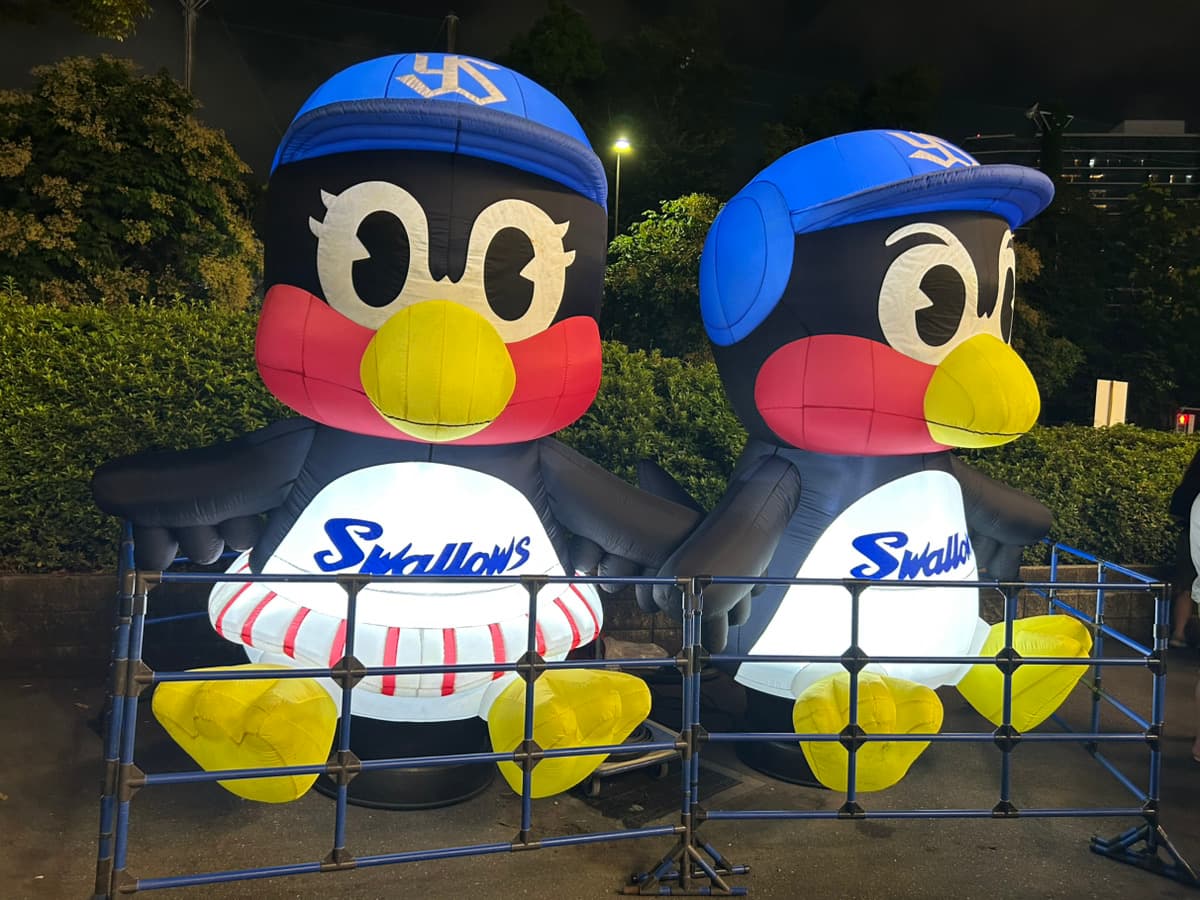
Jingu hits its 100th anniversary in 2026, and the combination of that history and an open-air ballpark in the center of Tokyo hasn’t lost anything with age.
Pick your seat with the sun in mind, pack light, respect the section rules, eat well, and if you’re there in midsummer, stay for the fireworks.
The skyline around the Gaien is going to keep changing. For now, get under the open sky, wave a tiny umbrella in the seventh, and enjoy a ballpark experience you can’t get anywhere in the majors.